

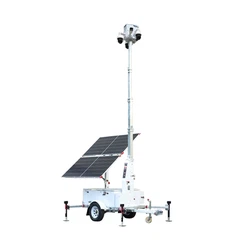
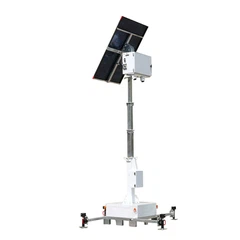
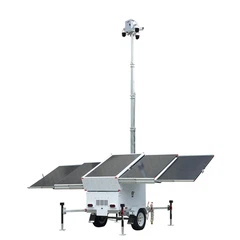

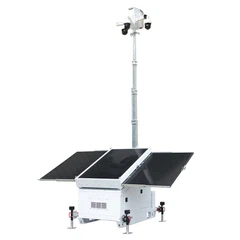
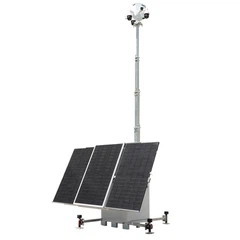
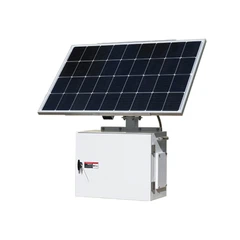
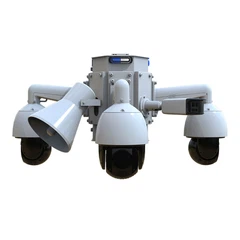
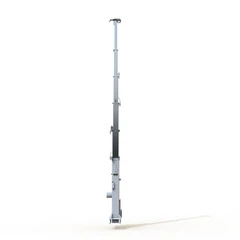


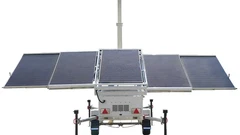


As urbanization accelerates, traditional security equipment struggles to meet dynamic security requirements due to grid dependency, inflexible deployment, and poor environmental adaptability. Solar-powered surveillance & lighting trailers that leverage "energy independence, rapid response and intelligent adaptability" effectively address five core urban security pain points.

Grid dependency: Reliable off-grid power for surveillance blind spots
Pain point: Areas such as aging communities, temporary construction sites and remote intersections face grid access challenges, resulting in surveillance gaps during power outages or line failures. Rapid deployment for temporary events (e.g., concerts, sports games) is costly and time-consuming with traditional solutions.
Solution: Integrated photovoltaic (PV) panels and energy storage systems enable 7×24 off-grid operation, maintaining full-load power for 3 consecutive rainy days (standard configuration: 500Ah battery + 200W PV panels). The "plug-and-play" design achieves deployment in 30 minutes, eliminating the risk of downtime and quickly filling temporary security gaps.
Slow Dynamic Response: Agile relocation for efficient resource utilization
Pain Point: Fixed surveillance systems incur high relocation costs (4-6 hours for reinstallation and troubleshooting), cannot adapt to temporary surveillance needs (e.g., construction sites, promotional zones), and result in wasted resources.
Solution: All-terrain chassis with hydraulic outriggers enables seamless transition from transport the solar towers to operation within 30 minutes. Modular design supports rapid equipment upgrades - 15-minute camera swap and 30-minute thermal imaging module installation - encouraging cross-project reuse and reducing idle asset costs by 30%.


Complex Environmental Challenges: All-Terrain Adaptability for Continuous Monitoring
Pain Point: Traditional systems underperform in low-light areas (e.g., high-rise shadows, bridge undersides) and fail in extreme weather (typhoons, heavy rain), with fixed installations unable to cover multi-dimensional urban scenarios.
Solution: A 9m elevating mast with 360° pan/tilt allows remote angle adjustment for complex traffic and architectural environments. Impact-resistant PV panels withstand category 12 typhoons, while intelligent MPPT controllers maintain over 60% power generation efficiency in low-light conditions, reducing failure rates by 80% compared to fixed monitoring systems.
High maintenance costs: Remote Management and Modular Replacement for Efficiency
Pain Point: Widespread fixed systems require frequent manual inspections and lengthy repairs (48 hours on average), with annual maintenance costs accounting for 15-20% of the initial investment.
Solution: Real-time remote monitoring reduces fault detection time to 5 minutes, while modular components (cameras, batteries) allow single operator replacement within 30 minutes - tripling repair efficiency. Annual maintenance costs are 40% lower than fixed solar tower systems, with leasing models reducing lifecycle costs by a further 25%.


Monitoring gaps: Dynamic Coverage for Evolving Risks
Pain Point: Static surveillance camera leaves blind spots in dynamic areas such as night markets and temporary traffic control zones, complicating post-event investigations.
Solution: Pendants support two modes: fixed surveillance with AI-driven anomaly detection (e.g., fights, unattended objects) and mobile patrol for emergency response. In a 2024 urban application, rapid deployment increased surveillance coverage from 75% to 98% and improved suspect identification efficiency by 40%.
Conclusion: Scenario-Driven Flexibility Redefines Urban Security
Mobile solar-powered trailers address four critical urban security challenges - power dependency, response time, maintenance costs, and coverage gaps - through three key advantages: energy independence, rapid deployment, and modular scalability. Ideal for short-term projects (1-6 months), frequent relocations (construction sites, event security), and emergency deployments, they reduce initial investment by 50% and achieve ≥5 project rotations per year, transforming security resources from "fixed assets" to "flexible nodes."
Industry stakeholders should align cctv trailer selection with project duration, relocation frequency, and functional requirements (e.g., license plate recognition modules) to balance cost and performance and ensure robust support for smart city security networks.