






When companies look for ways to reduce security costs, one question often comes first:
Can cameras replace security guards?
That is usually the wrong question.
A guard checking driver credentials at a gate is doing a very different job from a guard patrolling a construction site, warehouse yard, equipment storage area, or remote property at night.
Some tasks require physical interaction. Others mainly require reliable visibility, fast detection, and a clear response process.
The better approach is to evaluate each function and decide where people are necessary and where technology can provide better coverage.
Don't Count Guards. Count Functions.
Security teams may handle access control, visitor management, perimeter patrols, equipment protection, yard observation, and incident response.
These are not the same jobs.
Access control often requires someone onsite. But perimeter patrols, storage yards, construction areas, and other observation-heavy posts may be better suited to cameras, analytics, and remote monitoring.
The goal is not to remove guards simply because cameras are available. It is to use people where physical presence adds value.
Where Mobile Surveillance Changes the Equation
A guard walking a perimeter can only see one area at a time. Large sites may include fences, entrances, vehicles, containers, materials, machinery, and blind spots across a wide area.
This is especially useful for construction sites, logistics yards, parking areas, equipment storage, solar farms, vacant properties, temporary projects, and remote sites.
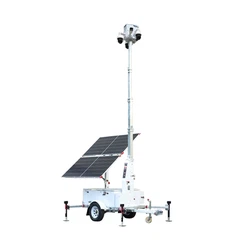
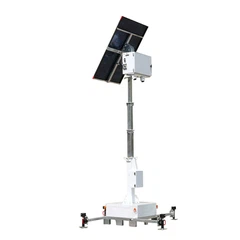
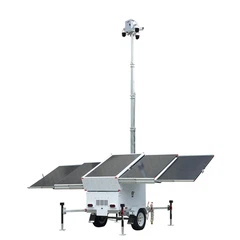
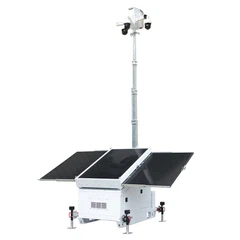
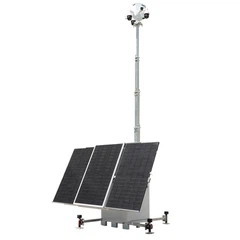
Mobile surveillance towers and trailers can also be relocated as the site changes, making them useful when permanent CCTV is too slow, expensive, or inflexible.

Why Off-Grid Mobile Surveillance Can Be Useful
Temporary and remote sites do not always have convenient power or network infrastructure.
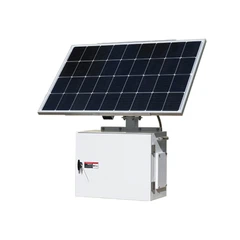
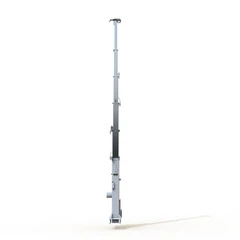
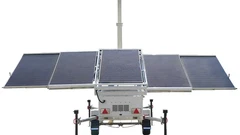
BIGLUX mobile surveillance units combine a deployable platform with solar power, battery storage, telescopic mast, and equipment enclosure.
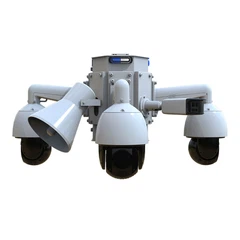
Customers can integrate their own cameras, NVR, router, Starlink, speakers, or other security equipment.
This allows an existing security solution to be deployed without permanent poles, trenching power cables, or fixed infrastructure.
Solar, battery, mast, and power configurations can be selected according to equipment consumption, climate, site conditions, and required runtime.

A Hybrid Security Model Often Makes More Sense
For many sites, the best solution is not guards or technology.
It is both.
A physical guard can remain at an entrance where driver interaction and access control are important, while mobile surveillance units cover the perimeter, parking areas, equipment, or other low-traffic zones.
Cameras provide continuous visibility. Remote monitoring software or a monitoring center can review events and trigger the required response. Onsite personnel can focus on situations that actually require a person.
This can improve coverage without asking guards to spend most of their time repeatedly walking the same patrol route.

Questions to Ask Before Replacing a Guard Post
Before changing your security model, ask:
What is this post actually responsible for?
Define the real task: access control, observation, deterrence, verification, patrol, or physical response.
How much physical interaction is required?
If regular face-to-face interaction is necessary, a guard may still be essential.
How much of the job is observation?
Posts that mainly watch large areas are stronger candidates for surveillance technology.
What areas are not visible while the guard is somewhere else?
Patrol routes naturally create gaps in coverage.
What happens after an event is detected?
A camera alone is not a complete security plan. Someone still needs to verify and respond.
Does the site need permanent or temporary infrastructure?
For temporary, changing, or remote sites, a mobile solar surveillance unit may be more practical than fixed CCTV.
Use People and Technology for the Jobs They Do Best
The objective is not simply to replace guards with cameras.
Physical presence still matters for access control, interaction, and intervention. But when the main requirement is to watch a large area consistently, mobile video surveillance can provide wider coverage and greater flexibility.
For many projects, the strongest approach is a combination: people where physical presence is necessary, and mobile surveillance where continuous visibility matters most.
BIGLUX provides mobile solar surveillance trailers, towers, and skid-mounted systems for temporary and off-grid security applications.
If you are planning a project, share your site type, equipment power consumption, camera requirements, and operating environment. We can recommend a suitable platform and power configuration.