

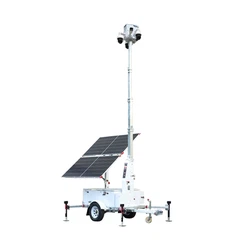
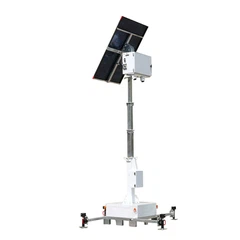
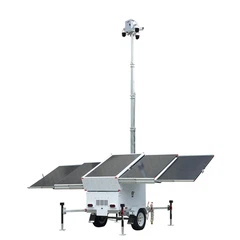

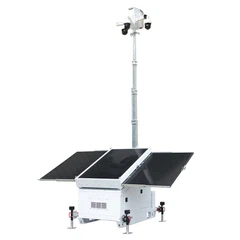
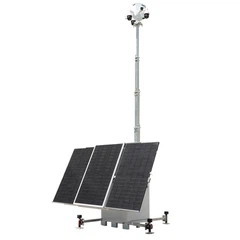
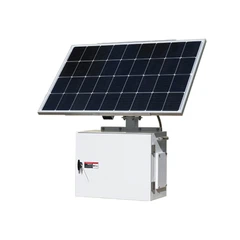
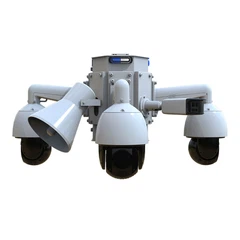


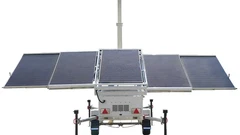


Solar-powered security trailers serve as an eco-friendly, flexible solution for mobile surveillance across various scenarios. If you're investing in this off-grid security equipment, you may wonder about their overall service life and long-term performance. Below is a comprehensive breakdown of their lifespan, operational efficiency, and actionable tips to maximize your investment value.
Core Factors Influencing Solar Security Trailer Lifespan

The average service life of mobile solar surveillance trailers ranges from 5 to 10 years. This variable lifespan is mainly determined by the service life of individual core components and external environmental conditions:
Solar Panels (20–25 Years): High-quality solar panels feature excellent weather resistance and structural durability, designed to withstand decades of outdoor harsh conditions, making them the longest-lasting component of the entire system.
Batteries (5–10 Years): As the core energy storage unit, batteries are the shortest-lived key component. Their actual service life depends on daily charge-discharge cycles and usage frequency. Regular inspections and standardized charging and discharging practices effectively avoid premature failure and unexpected downtime.
Ambient Environment: Trailers operating in moderate or cool climates deliver longer service life and more stable performance. In contrast, units deployed in areas with prolonged extreme desert heat face accelerated component aging and shortened overall lifespan.
Long-Term Efficiency & Performance Changes
The operational efficiency of solar security trailers will gradually change with usage time and external conditions, with the main influencing factors as follows:
Natural Efficiency Attenuation: Accumulated dust, debris, and natural component wear will slowly reduce solar panel energy conversion efficiency. Regular surface cleaning is an effective way to maintain optimal power generation performance.
Weather Condition Interference: Continuous heavy cloud cover will temporarily lower power generation output. Extreme weather such as hail storms may cause physical damage to panels and other exposed components.
Maintenance Status: As off-grid and temporary surveillance equipment, solar security trailers rely heavily on routine maintenance. Timely inspection and upkeep ensure long-term operational stability and reliability.

Rigid vs. Flexible Solar Panels: Durability & Cost Comparison
The type of solar panel directly affects the trailer's durability, operational efficiency, and long-term cost-effectiveness. The core differences between rigid and flexible panels are as follows:
Rigid Solar Panels
Constructed with tempered glass and silicon materials, rigid panels boast outstanding structural robustness and vibration resistance, adapting well to road transportation and complex outdoor environments. With a service life of more than 25 years, they require higher upfront investment but deliver superior long-term value and stable performance.
Flexible Solar Panels
Flexible panels are lightweight and aerodynamic, suitable for lightweight installation scenarios. However, they have poor overall durability, with a service life of only 5 to 10 years. They are also prone to overheating in high-temperature environments, leading to accelerated performance attenuation.
Panel Performance Quick Comparison
|
Panel Type |
Efficiency |
Lifespan |
Cost |
|---|---|---|---|
|
Rigid |
14% - 16% |
25+ Years |
Higher |
|
Flexible |
8% - 9% |
5 - 10 Years |
Medium |

Best Practices to Prolong Trailer Lifespan
Regular Comprehensive Inspections: Clean solar panels regularly with clean water and soft cloth to remove dust and stains. Inspect wiring systems for corrosion, aging and looseness, and monitor battery status and charge-discharge performance in real time.
Optimize Deployment Placement: Park and fix the trailer in an open, unshaded area. Adjust the panel angle reasonably to maximize daylight absorption and ensure sufficient power generation.
Targeted Component Upgrades: There is no need to replace the entire trailer when individual parts age. Timely upgrade and replace aging batteries, surveillance cameras and wiring systems to renew the overall equipment performance and extend the system's service life.

Frequently Asked Questions
Q: How long do solar-powered security trailers last in total?
A: The overall service life ranges from 5 to 25 years. The trailer frame and solar panels can work stably for decades, while wearable core parts such as batteries and surveillance cameras generally need replacement every 5 to 10 years.
Q: What daily maintenance do solar security trailers require?
A: The maintenance threshold is low with minimal daily work required. It only needs periodic cleaning of solar panels, as well as regular inspection of battery health and electronic connection lines to ensure stable operation.
Q: Are rigid solar panels better than flexible ones for security trailers?
A: Yes. For outdoor mobile security trailer scenarios, rigid panels are the preferred option, thanks to their exceptional durability, strong weather resistance, vibration resistance and far longer service life.